For individuals navigating the complexities of intestinal transplantation and digestive recovery, selecting the right Gluten Free Meal Ideas is a critical step in managing absorption and long-term gut health. This guide provides evidence-based, practical meal ideas and preparation strategies designed to support your nutritional needs while ensuring dietary safety in your daily routine. You will find actionable advice on building balanced, whole-food menus that simplify your recovery process and help you regain confidence in every meal.
Essential Principles of Gluten-Free Nutrition and Naturally Gluten-Free Meal Ideas
The most effective way to manage gluten-free nutrition for digestive health is to prioritise naturally gluten-free whole foods such as rice, potatoes, eggs, meat, fish, beans, fruit, and vegetables, which are inherently easier for a recovering gut to process. By focusing on these unprocessed staples, you eliminate the risk of hidden gluten often found in highly processed substitutes, ensuring your body receives high-quality nutrients without unnecessary digestive irritation. Remember: Always consult your transplant team before making major diet changes, as your specific medical requirements may vary.
| Food Group | Why It Matters for Recovery |
|---|---|
| Lean Proteins | Essential for tissue repair and maintaining muscle mass. |
| Complex Carbs | Provides steady energy without spiking blood glucose. |
| Fresh Produce | Delivers vital micronutrients while remaining gentle on the gut. |
Naturally Gluten-Free Foundations and Quinoa or Chickpea Meal Ideas
Naturally gluten-free whole foods provide the safest and most reliable foundation for a sensitive digestive system because they lack the complex additives and anti-nutrients found in processed alternatives. Incorporating ingredients like quinoa, fresh spinach, tomatoes, mushrooms, and lean proteins allows you to construct meals that are gentle on the intestinal lining while providing essential vitamins and minerals.
Whole-Food Staples and Flavour Substitutions
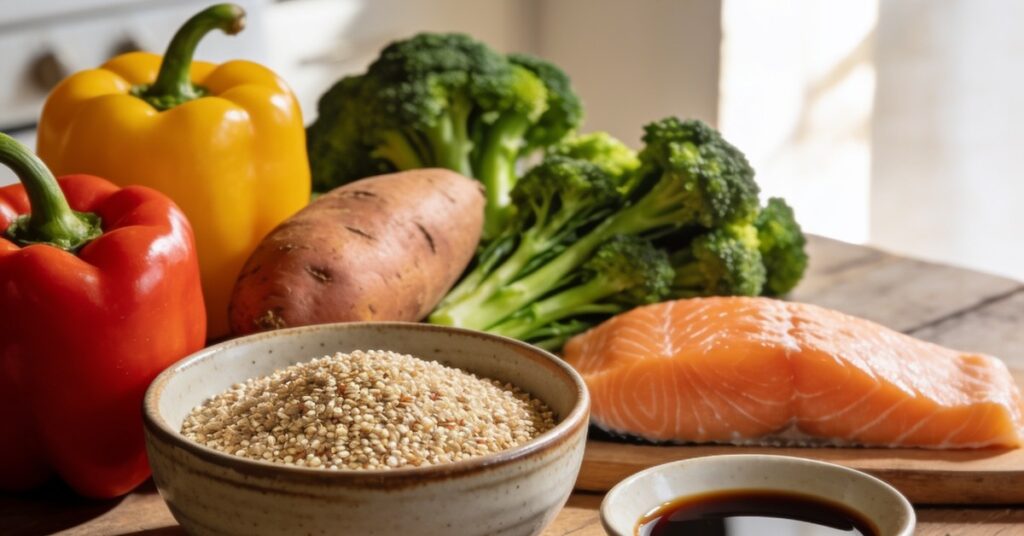
You can create nutrient-dense, safe meals by combining simple ingredients like quinoa salads with cucumbers, cherry tomatoes, olive oil, lemon juice, and feta cheese, or by preparing salmon and vegetable rice bowls with steamed broccoli and edamame. When recipes call for soy sauce, simply use tamari as a direct, gluten-free substitute to maintain the depth of flavour without the risk of wheat-based additives. Other excellent options include coconut and chickpea curry with spinach, turmeric, and cumin served with rice, or refreshing avocado and tuna lettuce wraps using flaked tuna and diced avocado, which are perfect for maintaining hydration and healthy fats.
Streamlined Meal Preparation for Midweek Meal Ideas and Traybake Recipes
Streamlined meal preparation is achieved by utilising high-efficiency cooking methods like sheet-pan roasting and microwave-assisted cooking, which allow for nutrient-dense meals to be prepared in under 30 minutes. These techniques are ideal for those recovering from intestinal failure, as they reduce the physical energy required for cooking while ensuring you consume consistent, safe food throughout your week.
Efficient Cooking and Batch Storage
You can bake gluten-free sausages, bell peppers, onions, and potatoes at 200°C (400°F) for 25 minutes to create a complete, balanced meal with minimal cleanup. For a quick alternative, microwave a whole sweet potato until soft and stuff it with black beans, corn, and sour cream or guacamole, or prepare rice bowls using microwave-ready rice, pan-cooked chicken or black beans, avocado, and salsa. If you prefer a lighter option, cook a zucchini and cherry tomato frittata in an oven-safe skillet until set, or prepare Creamy Garlic Pasta and Creamy 10-Minute Gnocchi for rapid, comforting meals.
Optimising Breakfast for Sustained Energy and Gluten-Free Recipes
Optimising your breakfast involves consuming high-protein and fibre-rich foods like eggs, chia seeds, and lean meats, which provide sustained energy and support stable blood glucose levels throughout the morning. Ever wondered if your breakfast fits into your recovery plan? In my experience, keeping it simple with whole foods is the best way to avoid early-morning digestive fatigue.
Nutrient-Dense Morning Recipes
For a quick, 10-minute start, try pesto eggs—two eggs fried in a tablespoon of pesto served on gluten-free toast with mashed avocado—or enjoy Berry Kefir Overnight Oats made with 1/2 cup of gluten-free rolled oats, 1 tbsp chia seeds, 1/2 cup of milk or kefir, and 1/2 tsp cinnamon. If you have slightly more time, bake an 18-minute Dutch Baby by mixing 4 eggs, 1/4 cup of melted butter, 1 cup of gluten-free 1-to-1 baking flour, and 1 cup of milk, then baking at 450°F (230°C). For savoury preferences, consider Sweet Potato & Black Bean Tacos with two gluten-free corn tortillas, or a Spicy Fried Breakfast Rice featuring cooked rice, red chillies, bacon, tamari, and a soft-boiled egg.
Balanced Lunch Ideas for Work and Recovery
Balanced lunch ideas for work are best structured around lean proteins, healthy fats, and complex carbohydrates, such as quinoa or brown rice, which help maintain energy levels without causing post-meal fatigue. These portable options are designed to facilitate digestive ease while providing the necessary fuel for your daily activities.
- Ensure the product is certified gluten-free to avoid cross-contamination.
- Monitor your daily intake of protein and fibre to track how your gut responds.
- Stay hydrated throughout the day, especially if you are increasing your fibre intake.
Portable and Digestion-Friendly Options
You can assemble a Chicken or Black Bean Burrito Bowl using brown rice or quinoa, grilled chicken or black beans, corn, peppers, salsa, and avocado, or prepare a Lemon Chicken Quinoa Salad with chilled quinoa, diced grilled chicken, cucumber, red onion, mint, and lemon-olive oil dressing. For a lighter approach, use romaine or collard green leaves as wraps for certified gluten-free deli turkey, avocado, and tomato. A Bistro Protein Box containing hard-boiled eggs or sliced cheese, raw veggies, hummus, and gluten-free seed crackers is also an excellent, no-cook solution.
Family-Friendly Dinner Ideas: Chicken Traybake, Prawn, and Halloumi Dishes
Family-friendly gluten-free dinners are most successful when they utilise traybake methods or familiar, comforting flavour profiles that cater to both the need for digestive safety and the desire for palatable, enjoyable meals. These recipes ensure that you can maintain your dietary requirements while sharing a meal with your household.
Highly-Rated Recipes
For efficient family dining, a sheet-pan chicken fajita bake roasted at 200°C (400°F) for 20 minutes is a reliable choice, particularly when served with corn tortillas toasted in a dry hot pan for 30-60 seconds. Other highly-rated options include a sweet potato & peanut curry, a creamy salmon, leek & potato traybake, and an Amatriciana chicken traybake. For diverse international flavours, try a Paneer korma, Prawn tikka masala, or a spicy cauliflower halloumi rice. These dishes cater to various dietary preferences while remaining strictly gluten-free.
Strategic Meal Planning for the Week
Strategic meal planning is the key to maintaining a consistent gluten-free diet, and you can achieve this by using resources like the 28 gluten-free meal prep recipes available on Sweet Peas and Saffron. By dedicating time to organise your weekly intake, you ensure that your digestive system is not subjected to unplanned or „emergency” food choices that might contain hidden gluten.
- Consult your dietitian regarding your specific daily calorie target.
- Monitor your symptoms and keep a food diary to identify any sensitivities.
- Keep a list of 'safe’ snacks ready for when energy levels dip.
Preparation and Ingredient Swaps
To successfully prep for the week, try a 20-minute Teriyaki Chicken Fillet meal with broccoli, and always remember to swap soy sauce for coconut aminos or tamari to maintain safety. When following general recipes, replace standard bread crumbs with gluten-free versions to ensure compatibility. If you are seeking long-term inspiration, a 4-week gluten-free meal plan is a valuable tool, covering a wide range of vegan, vegetarian, chicken, fish, turkey, pork, and beef options to keep your nutrition diverse and manageable.
Budget-Conscious Nutritional Planning
Budget-friendly gluten-free meal ideas are found by focusing on naturally affordable staples like cauliflower, squash, and chicken, which allow for high-quality nutrition without the premium price of specialist processed items. You can often find collections of 14 gluten-free meals for £50, proving that health-conscious eating is accessible regardless of your budget.
Cost-Effective Meal Ideas
You can create satisfying meals such as Loaded Cauliflower Bowls, a hearty Spaghetti Squash Casserole, or simple Baked Lemon-Pepper Chicken. Other budget-friendly staples include Tofu Tacos, Herb-Grilled Chicken Frites, Old Bay Salmon, and homemade gluten-free cauliflower pizza. By focusing on these versatile, whole-food ingredients, you can stretch your budget while ensuring your diet remains entirely gluten-free and supportive of your recovery.
Gluten-Free Solutions for Picky Eaters
For picky eaters or those with specific food aversions, gluten-free versions of familiar favourites such as chicken strips, pasta, and casseroles provide a sense of normalcy without compromising digestive safety. Integrating these options can help maintain nutritional intake when appetite or interest in food is low.
Comfort Food Alternatives
Products such as Perdue gluten-free chicken strips, Jovial Foods brown rice pasta, and Schär gluten-free snacks and baked goods are excellent staples to keep in your pantry. You can also enjoy treats like Katz gluten-free cookies and donuts, or prepare homemade meals like 10-Minute Gluten-Free Chicken Enchiladas, a Gluten-Free Tater Tot Casserole, Gluten-Free Baked Parmesan Chicken, or a copycat Panda Express Gluten-Free Orange Chicken. These meals provide the comfort of traditional flavours while remaining safe for those managing digestive health.
Frequently Asked Questions
How can I safely incorporate complex vegetables like broccoli or leek into my diet?
Start by steaming or roasting these vegetables thoroughly to break down tough fibres, which makes them much easier for a sensitive gut to digest. Always introduce them in small portions to monitor your individual tolerance levels.
Is it necessary to buy expensive gluten-free pasta or processed substitutes?
It is not necessary to rely on expensive processed substitutes, as many whole foods like potatoes, rice, and buckwheat are naturally gluten-free and often better for your health. Focus your budget on high-quality proteins and fresh produce to maximise your nutrient intake.
How do I manage the risk of cross-contamination in my kitchen?
Designate a specific area for gluten-free preparation and ensure that shared items like toasters or wooden utensils are strictly avoided. Using stainless steel or glass containers for storage also helps maintain a clean, gluten-free environment.
What should I do if I accidentally consume gluten?
Do not panic, as a single exposure is unlikely to cause long-term damage, but focus on hydration and consuming gentle, bland foods for the next few days. If you experience severe symptoms, contact your transplant medical team to discuss any impact on your graft function.
Prioritising simple, whole-food ingredients is the most supportive step you can take to foster digestive stability and confidence during your recovery journey. Always listen to your body and maintain close communication with your transplant team to ensure every meal serves your long-term health and wellbeing.