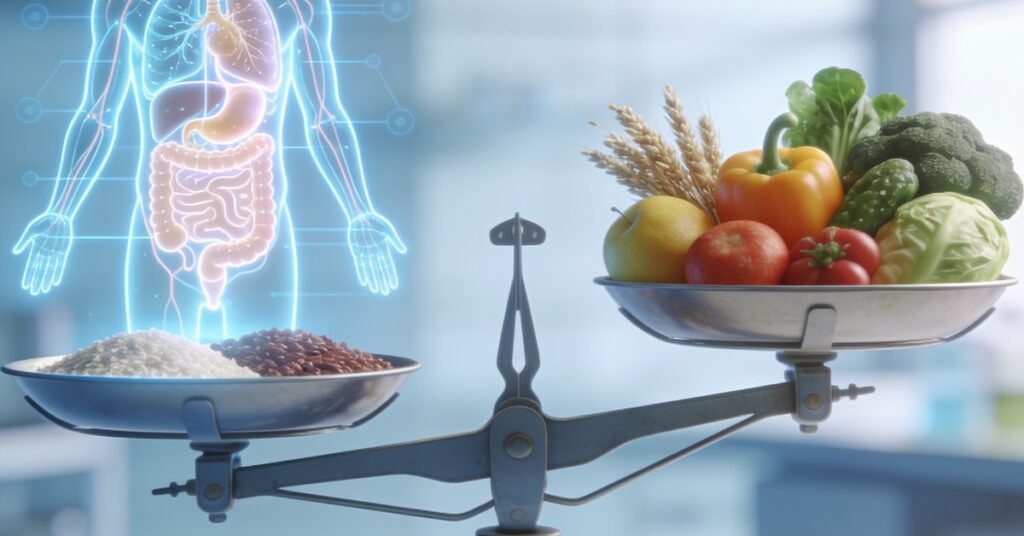
For patients navigating the complexities of intestinal transplantation and digestive recovery, mastering the balance between energy intake and expenditure is fundamental to maintaining long-term health and metabolic stability. In this article, you will learn the scientific principles governing how your body processes energy and how to practically manage your nutritional needs during the recovery process. We have distilled complex clinical insights into actionable guidance to help you confidently navigate your weight management and support your digestive healing journey.
Outline the relationship between energy intake, energy expenditure and weight
Your body weight is primarily dictated by the fundamental interplay between the energy you consume and the energy you utilise. This balance serves as the foundational principle for understanding how weight fluctuates or remains stable over time.
Understanding Energy Intake
Energy intake refers to the total calorific value derived from the consumption of foods and beverages. The primary macronutrients that contribute to this energy supply include:
- Carbohydrates
- Proteins
- Fats
- Alcohol
Components of Energy Expenditure
Energy expenditure represents the total number of calories your body burns throughout the course of a day. This process is comprised of three distinct elements:
- Basal Metabolic Rate (BMR): The energy required to maintain essential physiological functions while at rest, which accounts for approximately 60% to 75% of your daily burn.
- Thermic Effect of Food (TEF): The energy utilised by the body to digest, absorb, and process the nutrients consumed, typically occupying about 10% of total expenditure.
- Physical Activity: The energy expended through movement and intentional exercise, which fluctuates significantly depending on your activity levels.
Weight Dynamics and Balance
The state of your body weight is subject to the mathematical relationship between these two variables:
- Energy Surplus: When your energy intake exceeds your total expenditure, the surplus energy is stored within the body as adipose tissue (fat), resulting in weight gain.
- Energy Deficit: When your energy expenditure exceeds your intake, the body is forced to utilise its stored fat and tissues as fuel, leading to weight loss.
- Energy Balance: When intake and expenditure are equal, your energy stores remain stable, and your body weight does not significantly change.
Please note that this information is intended for educational purposes and does not constitute formal medical diagnosis or advice. Always seek professional guidance for personalised health and nutrition plans.
Understanding Energy Balance Equation and Weight Change
To properly outline the relationship between energy intake energy expenditure and weight, one must view the body as a precise engine where weight change is the result of Energy Status (ES) equalling Energy Intake (EI) minus Energy Output (EO). When these two sides of the equation are equal, you maintain a neutral energy balance and a stable weight; when your intake exceeds your output, you enter a positive energy balance, and the body stores the excess energy, with 60–80% of that gain typically manifesting as body fat. Conversely, a negative energy balance occurs when your output exceeds your intake, leading to weight loss as the body draws upon its reserves.
How Energy Intake and Energy Needs Relate
Energy intake is essentially the fuel provided by your diet, and for the vast majority of people, more than 95% of food energy is successfully digested and absorbed from the gastrointestinal tract. To put this in perspective, one kilocalorie is the amount of heat required to raise the temperature of 1 kg of water by 1 degree Celsius, and it is equivalent to 4.184 kilojoules. Because the gastrointestinal tract is so efficient at absorbing this fuel, it is vital to monitor what you consume to ensure it aligns with your specific recovery or maintenance requirements.
Components of Energy Requirement and Expenditure
Your Total Daily Energy Expenditure (TDEE) is the sum of three primary processes: your resting metabolic rate, the energy used to digest food, and the energy burned through movement. The scientific framework for this regulation, as outlined in the Am J Clin Nutr 2012 study, confirms that balancing these components is the cornerstone of effective body weight regulation.
Resting Metabolic Rate and Basal Functions
The Resting Metabolic Rate (RMR), or Basal Metabolic Rate (BMR), is your largest energy consumer, accounting for 60% to 75% of your total daily expenditure. Because muscle tissue is metabolically active and burns more calories at rest than fat tissue, building lean muscle through strength training can effectively increase your BMR. Conversely, your BMR naturally declines as you age due to the gradual loss of muscle mass, and men generally exhibit a higher BMR than women due to having a higher proportion of lean tissue.
The Thermic Effect of Food
The Thermic Effect of Food (TEF) is the energy cost your body incurs to digest, absorb, and process nutrients, representing approximately 10% of your daily energy intake. The composition of your meals significantly influences this, as shown in the table below:
| Nutrient Category | Energy Cost to Process |
|---|---|
| Protein | 20% to 30% |
| Carbohydrates | 5% to 15% |
| Fats | 0% to 3% |
Activity Thermogenesis and Healthy Weight
Physical activity, defined as bodily movement produced by skeletal muscles, is the primary tool for long-term weight maintenance and includes both exercise and Non-Exercise Activity Thermogenesis (NEAT). While the doubly labeled water method serves as the reference standard for measuring total energy expenditure, you can think of NEAT as the energy you burn during the routine tasks of daily living. Regular exercise remains vital here, not only for immediate calorie output but for building the lean muscle mass that supports your metabolic health.
Metabolic Adaptation and Appetite Regulation
Metabolic adaptation is a physiological response where the body reduces its energy expenditure below predicted levels following significant weight loss, often making weight maintenance more challenging. Research by C. Martins (2022) indicates that this adaptation can occur after a 16% weight loss in premenopausal women, leading to a decrease in both RMR and NEAT. As the body adjusts, hormonal shifts—including a drop in leptin and thyroid hormones—occur, and as highlighted by C. Martins (2023), this adaptation can lead to a greater drive to eat, a phenomenon further explored in the work of Martínez-Gómez and Roberts (2022).
Practical Strategies for Weight Gain and Maintenance
Managing your energy balance effectively involves using the Mifflin-St Jeor formula to calculate your base needs and then adjusting based on your real-world outcomes. Ever wondered if your current intake perfectly fits into your specific recovery plan, or how to accurately outline the relationship between energy intake energy expenditure and weight for your unique physiology?
Remember: Always consult your transplant team before making major diet changes, as your requirements may differ significantly from the general population due to immunosuppression and altered gut absorption.
- Calculate your BMR using the Mifflin-St Jeor formula.
- Multiply by an activity factor (1.2 to 1.9) to find your TDEE.
- Monitor your weight consistently at the same time each week.
- Adjust your daily calorie target by 100–200 calories if trends shift.
Factors Influencing Appetite Regulation
The hypothalamus is the command centre for your appetite, integrating signals from hormones like leptin and ghrelin to regulate your hunger and fullness. You can support this natural regulation by prioritising high-protein foods, which increase satiety, while being mindful that high-fat and ultra-processed foods may trigger overconsumption. Additionally, external factors such as sleep restriction can lead to a decline in metabolic efficiency, and meal timing—such as eating at 6 PM versus 6 AM—can influence how your body processes energy.
Frequently Automated Questions
Does the type of protein consumed change energy expenditure?
Yes, protein has a higher thermic effect than other macronutrients, meaning the body burns more energy processing it. This can assist slightly in overall energy expenditure compared to high-fat or high-carbohydrate meals.
How does gut health impact the energy balance equation?
Intestinal health directly affects how efficiently you absorb nutrients from your intake. If malabsorption is present, your effective energy intake may be lower than the caloric value of the food consumed, which is a critical consideration for transplant patients.
Can stress influence my weight change?
Stress can influence your appetite regulation by altering hormone levels such as cortisol, which may lead to increased cravings or changes in energy expenditure. Managing stress is often as important as managing your diet for long-term health.
Is it possible to increase NEAT without structured exercise?
Yes, you can increase NEAT by incorporating more movement into your daily tasks, such as standing more frequently or taking short walks. These minor adjustments contribute significantly to your total energy output over time.
Successfully managing your recovery requires consistent monitoring of your total daily energy expenditure to ensure your body receives exactly what it needs to thrive. Always adjust your caloric intake by 100 to 200 calories if your weight trends shift, keeping that delicate metabolic balance working for your long-term health as you continue to outline the relationship between energy intake energy expenditure and weight.