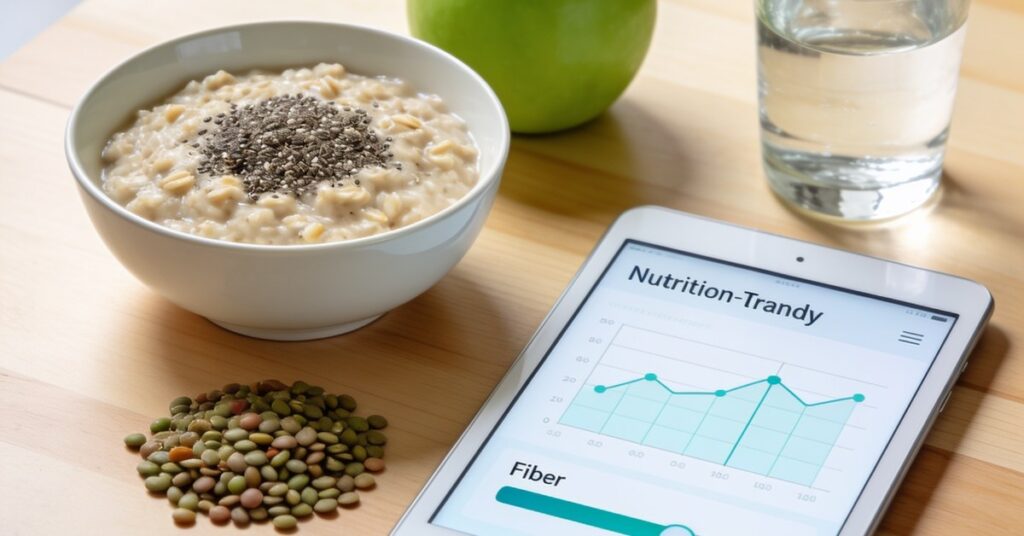
For patients navigating the complexities of intestinal health or post-transplant recovery, managing dietary fiber is a delicate balance that directly impacts bowel function and long-term absorption. In this article, you will learn how to use a Fiber Intake Calculator as a practical tool to safely monitor your nutrition, helping you understand how to adjust your intake to meet your body’s unique clinical needs. We will provide evidence-based guidance to help you navigate these daily requirements with confidence, ensuring your digestive health remains a priority throughout your recovery journey.
A Fiber Intake Calculator is a digital tool designed to help you estimate your daily requirements based on your age, biological sex, activity level, and total energy intake. By inputting your data, you can establish a baseline, typically using the standard ratio of 14 grams of fiber per 1,000 calories consumed, to ensure you are meeting the adult target of 25 to 38 grams per day for optimal gut motility. Getting this number right is the first step in regaining control over a digestive system that has been through the wars, and trust me, your gut will let you know if you overdo it.
Determining Your Daily Fiber Intake and Fiber Goal
To use a Fiber Intake Calculator effectively, you must input accurate personal details, including your age, biological sex, height, current weight, and activity level to generate a tailored recommendation. Once you have established your daily calorie target, aim for the standard ratio of 14 grams of fiber per 1,000 calories to support your overall digestive function and help lower cholesterol by consuming at least 7 grams of fiber daily.
Recommended Fiber Intake by Demographic
| Group | Daily Fiber Goal |
|---|---|
| Men (19–50 years) | 38g |
| Men (51+ years) | 30g |
| Women (19–50 years) | 25g |
| Women (51+ years) | 21g |
How to Read Foods High In Fiber and Use Our Fiber Calculator
You can calculate your total fiber intake by identifying „Dietary Fiber” under the „Total Carbohydrates” section on nutrition labels and multiplying the grams per serving by the number of servings you consume. To maintain a healthy diet, look for foods with 20% or more of the Daily Value (DV), where 28g is considered 100% DV; products with 5g or more per serving are classified as „high fiber,” while those providing 2.5g or more are considered a „good source.” Remember, labels are your best friend when navigating the supermarket aisle; don’t just eyeball the packaging, check the small print every time.
Managing Blood Sugar with Fiber Supplement and Daily Fiber
A Fiber Intake Calculator supports metabolic stability by helping diabetics hit specific targets, such as 25–28 grams per day for women and 28–34 grams for men, as recommended by the Academy of Nutrition and Dietetics. Beyond whole foods, these patients may find that adding a viscous fiber supplement at a dosage of 13 grams per day aids in blood glucose control, though individual tolerance levels must be monitored carefully. If you are struggling with energy dips, keeping your intake consistent can make a world of difference in how you feel throughout the afternoon.
Calculator to Find Soluble and Insoluble Fiber in Your Diet
On a keto or low-carb diet, your fiber target is managed by using the net carbs formula: Total Carbs minus Dietary Fiber minus half of the Sugar Alcohols. By maintaining a target of 25 to 30 grams of fiber per day, you can ensure your digestive system remains active even when your net carb intake is restricted to the standard 20 to 50 grams per day. It is a bit of a maths game, but once you get the hang of the formula, it becomes second nature during your weekly meal prep.
Limitations of Standard Calculators and Getting Enough Fiber
Standard calculators provide a baseline estimate but often fail to account for individual gut adaptation, the specific ratio of soluble and insoluble fiber, or the nuanced needs of patients with a history of intestinal failure. Most of these digital tools stop scaling accurately once you exceed the general guideline of 38g for men and 25g for women, meaning they cannot safely adjust for the high-fiber diets sometimes required in specific clinical recovery scenarios. These tools are meant to be a compass, not a map for every twist and turn of your personal recovery.
Strategies to Increase Your Daily Fiber Intake Safely
You can increase your daily fiber intake safely by adding only 2 to 3 grams per week, ensuring your digestive system has sufficient time to adjust without causing distress. To facilitate this transition, you should double your daily water consumption to 2 to 3 litres, as high-fiber intake requires significant hydration to prevent blockages or discomfort. Important: Always consult your transplant team or dietitian before making major changes to your diet, as your specific medical history, such as graft function or current immunosuppression, dictates what your gut can handle.
Steps for Getting Enough Fiber
- Start with one individual serving per day if using supplements like psyllium husk.
- Mix half-cups of chickpeas or lentils into soups or salads.
- Stir a tablespoon of chia or flaxseeds into your morning yoghurt.
- Leave the skins on fruits and root vegetables to capture extra roughage.
- Swap refined white grains for quinoa or whole-wheat alternatives.
Frequently Asked Questions
How much fiber should I eat in a day?
Most healthy adults require between 25g and 38g of fiber per day, depending on their age and biological sex. It is best to use a Fiber Intake Calculator to find the precise target that aligns with your specific calorie needs.
What is the difference between soluble and insoluble fiber?
Soluble fiber dissolves in water to form a gel-like substance that helps manage blood sugar and cholesterol levels. Insoluble fiber does not dissolve and adds bulk to your stool, which is essential for maintaining regular bowel movements.
Can I get too much fiber in my diet?
Yes, consuming excessive amounts of fiber too quickly can lead to bloating, gas, and abdominal discomfort. Always increase your intake gradually and ensure you are drinking enough fluids to help the fiber pass through your system smoothly.
Do I need a fiber supplement if I am eating enough vegetables?
If you can hit your daily targets through whole foods like fruits, vegetables, beans, and grains, you generally do not need a supplement. Supplements should only be introduced under the guidance of your medical team if you are unable to meet your required intake through diet alone.
Tailoring your fiber intake to your body’s unique requirements is the most effective way to maintain long-term gut health after surgery. Always increase your daily consumption incrementally while keeping your water intake high to ensure a smooth and comfortable transition.