For patients navigating the complexities of intestinal transplantation and digestive recovery, understanding the nutritional reality behind „Stone Age” dietary trends is vital to ensure that your gut-sensitive needs are met with scientific precision rather than modern myths. In this article, you will learn to distinguish between historical dietary patterns and evidence-based nutrition, helping you identify which whole-food principles can safely support your recovery and which should be approached with caution. By evaluating these ancient habits through a clinical lens, you will gain the practical knowledge required to make informed decisions that protect your long-term intestinal health.
Stone Age foods
The Core Concept of the Paleo Diet
The Stone Age diet, frequently referred to as the Paleo or caveman diet, draws inspiration from the assumed nutritional patterns of Paleolithic hunter-gatherer societies. This dietary framework champions the consumption of whole, unprocessed items such as lean proteins, fresh fish, seasonal vegetables, fruits, seeds, and nuts. Concurrently, it insists on the total avoidance of ingredients introduced during the rise of agriculture, such as dairy products, cereal grains, legumes, and processed sugars.
Evolutionary Philosophy
The fundamental premise of this lifestyle is that contemporary human biology has failed to evolve in alignment with the nutritional shifts precipitated by the agricultural revolution, which occurred roughly 10,000 years ago. Proponents assert that by reverting to the ancestral way of eating, individuals can successfully lower internal inflammation, enhance metabolic performance, and foster a healthier digestive system. In an era dominated by hyper-processed convenience foods, the concept that our physiology remains tethered to a prehistoric template fuels the widespread appeal of the Paleolithic regimen.
Typical Dietary Components
Adherents focus on items that would have been available to humans who relied on hunting and foraging. The primary staples include:
- Proteins: Grass-fed lean meats, poultry, wild-caught fish, and eggs.
- Produce: A variety of fresh fruits and non-starchy vegetables, such as spinach, peppers, and carrots.
- Healthy Fats & Seeds: Plant-derived oils like avocado, coconut, and olive oil, complemented by raw or dry-roasted nuts and seeds.
Prohibited Food Groups
To align with this ancestral philosophy, followers intentionally remove food categories that emerged after the onset of farming and modern industrialisation:
- Cereal Grains: Including wheat, barley, oats, and rice.
- Dairy Products: Milk, butter, yoghurt, and cheese.
- Legumes: Beans, lentils, peas, and peanuts.
- Processed Items: Refined vegetable oils, artificial additives, sugary sweets, and carbonated soft drinks.
- Other restrictions: Traditionalists also strictly limit the intake of salt and alcohol.
Scientific Perspective on Ancestral Nutrition
Whilst this nutritional strategy places a high value on nutrient-dense, whole foods, academics point out that early human diets were remarkably diverse. Diets were heavily dictated by regional geography and specific local climates rather than a uniform set of rules. Anthropological evidence indicates that Paleolithic groups relied on a broad spectrum of resources, consuming significant amounts of gathered plant fibres alongside animal proteins, debunking the myth that our ancestors lived exclusively on meat.
The Clinical Reality of the Stone Age Diet
The Stone Age diet, often romanticised as a cure-all, consisted of a highly variable intake of raw organs, wild game, seasonal berries, and wild plants, which is often nutritionally incompatible with the delicate requirements of a compromised digestive tract. Many enthusiasts of the caveman diet suggest that this approach ideally fits our genetic makeup, yet they often overlook the biological reality that humans evolved over approximately 2.5 million years ago to adapt to shifting environments rather than a static, rigid menu. While the focus on lean proteins and unprocessed ingredients mirrors some modern recovery goals, the original diet included high amounts of fibrous, uncultivated roots and raw materials that could cause severe obstructions or irritations in patients with intestinal failure or recent transplants. Remember: The Stone Age is a broad term covering thousands of years of survival, not a singular, medically validated prescription for modern gut health. Navigating the consumption of Stone Age foods requires a shift in perspective, moving away from the „ancestral” marketing hype and focusing entirely on the physiological capacity of your specific digestive system. It is also important to consider that modern humans possess a different microbiome than their ancestors, which influences how we process nutrients today.
The Composition of Prehistoric Stone Age Food
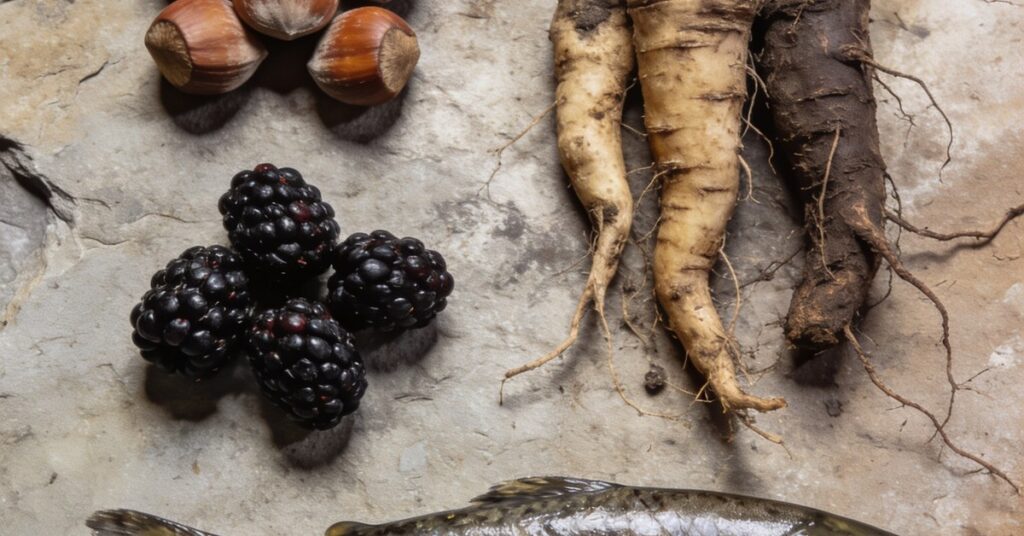
Prehistoric dietary intake was defined by extreme seasonality and geographic availability, with diets in Britain between 15000 BC and 2500 BC relying heavily on whatever could be hunted, gathered, or fished from the surrounding environment. Paleolithic humans were masters of survival, relying on a diverse array of wild resources such as blackberries, hazelnuts, nettles, dandelion leaves, and wild plums, consumed alongside high-protein sources like mammoths, rhinoceros, and bears. It is important to acknowledge that the nutritional density of these items varied by the day, as our ancestors lived in a state of perpetual flux regarding food security, unlike the controlled nutritional environments required for post-transplant patients today. An anthropologist might note that the hunter-gatherer lifestyle necessitated an omnivorous diet, yet for a modern patient, the transition from a western diet to an ancestral approach can be fraught with risks if the gut is not prepared for the high diversity of wild plant materials. Understanding that humans evolved to eat a variety of sources means that flexibility, not restriction, was the hallmark of our survival success.
| Food Category | Prehistoric Source | Digestive Suitability (Post-Transplant) |
|---|---|---|
| Protein | Mammoth, Bison, Deer | Low (if tough/fibrous) |
| Fat/Energy | Nuts, Seeds, Marrow | Variable (monitor tolerance) |
| Plants | Nettles, Roots, Berries | Low (due to high raw fibre) |
Primary Protein Sources and Stone Age Animals
Protein in the paleolithic period was sourced from a wide range of animals including deer, elk, hares, wild boars, and massive megafauna like the woolly mammoth. In specific regions such as Scandinavia and parts of Europe, aquatic resources like freshwater and marine fish, shellfish, and seals provided between 50% and 70% of total protein intake. For the upper-Paleolithic populations, mammoth protein alone could account for up to two-thirds of their daily protein requirements, representing a level of consumption that would be significantly higher than most modern, controlled clinical diets. Paleoanthropologist Peter Ungar suggests that early human populations consumed every part of an animal, including organ meats which are rich in vitamins, yet these are often avoided in modern, highly processed food paradigms. While these sources provided the necessary amino acids for survival, the sheer mechanical difficulty of digesting wild, lean game remains a significant hurdle for those with sensitive bowels. The food they hunted was often leaner than modern livestock, and the lack of antibiotics or growth hormones was a natural advantage, though the risk of parasites was a constant threat to stone age humans.
Plant-Based Foraging and Seasonal Gathering
Foraging provided the necessary micronutrients and caloric supplements through a rotation of wild plants, including nettles and dandelion leaves, alongside nuts like hazelnuts and acorns. These plant materials were gathered based on local availability, with wild fruit such as a berry or wild plums forming a critical part of the seasonal intake. While these plants provided essential vitamins, their high levels of raw fibre and tough cellulose would be considered medically hazardous for patients with stricture risks or impaired motility post-transplantation. The intake of Stone Age foods often involved consuming significant amounts of sugars from starchy foods that the human gut, especially one undergoing immunosuppression, might struggle to process efficiently. Unlike the modern diet, which is often stable, the ancestral paleolithic diet relied on the ability to forage whatever was available, a practice that would be quite chaotic for a patient requiring stable macronutrient counts. We must remember that plant foods were often tough and required extensive processing, which is why stone age recipes were essentially born out of the necessity to make roughage edible.
Evolutionary Perspectives on Dairy and Grains in the Stone Age
Dairy and cultivated grains have no place in a true Stone Age diet, as these food groups only became part of human consumption following the rise of agriculture during the neolithic era, which began around 9,000 BC and ended roughly 7,000 BC. Before this period, stone age people did not raise animals for milk or cheese, meaning that dairy products were entirely absent from the human experience for the vast majority of our history. While paleolithic ancestors did gather and consume wild grass seeds and starchy plants, the systematic cultivation of crops like wheat and barley, which defines our modern reliance on grains, was non-existent until the dawn of agriculture. This shift marks the end of the stone age, leading to a massive change in the human microbiome as we moved away from wild-foraged foods to domesticated crops, a transition that many experts believe contributed to the emergence of chronic diseases of civilization.
The Timeline of Agricultural Transition
The human ability to process dairy products is a relatively recent evolutionary development, with evidence suggesting that humans did not consume dairy until approximately 6,000 years ago. This transition was facilitated by the attempt to domesticate cows, goats, and sheep, which finally enabled the production of cheese and yogurt. For those recovering from intestinal surgery, it is crucial to note that the human gut has only been adapted to these concentrated lactose and casein sources for a fraction of our existence, which may explain why dairy intolerance remains a significant clinical issue in many transplant recovery pathways. Humans evolved to eat a variety of foods, but the introduction of grains and dairy marked a departure from the paleolithic humans’ standard, creating a rift between our ancestral biological needs and the contemporary modern paleolithic diet. This historical gap is why many patients feel better when avoiding processed grains, though this should be balanced with the need for easily digestible calories.
Traditional Preparation Methods for Stone Age Food
Stone Age humans processed their food through physical force and fire, using sharp stone tools to cut meat, smashing animal bones with heavy rocks to extract marrow, and crushing wild grains or roots on flat stones to create mash. These methods were essential for breaking down tough, fibrous, or raw materials into a form that the human digestive system could manage. By roasting meat over fire, baking flatbreads on hot rocks, or boiling starchy plant tubers, early humans started using fire to cook food, which performed a rudimentary form of „pre-digestion” that made these foods more palatable and, in some cases, easier for the body to absorb. This history of food preparation underscores the fundamental principle that even in the Stone Age, raw consumption was rarely the preferred state for hard-to-digest items, as paleolithic humans knew that heat was necessary for safety and digestibility. The use fire technique was perhaps the greatest innovation in human evolution, allowing for larger brains to develop due to the increased caloric efficiency of cooked meals.
Techniques for Reducing Food Complexity
Ever wondered if the „raw” approach of our ancestors is actually better for you? In my experience, post-transplant recovery is a journey, and managing your nutrition is a huge step toward getting back to normal life; however, sticking to the guidance of your transplant team is the best policy, as they understand your specific graft function better than any historical trend. When you are tempted by the simplicity of Stone Age foods, remember that your gut needs predictability, not the variability of a hunting and gathering lifestyle. Loren Cordain and other researchers have argued about the health benefits of the paleo diet, but for a transplant patient, the focus must be on health and longevity through medical supervision rather than anecdotal fad diet claims. We must be wary of diseases of civilization, such as heart disease and diabetes, which are often linked to the western diet and processed foods, yet this does not mean that all ancestral practices are safe for a surgical patient. It is always best to compare your current intake to a mediterranean diet, which is often more sustainable for long-term health than the restrictive nature of a modern paleo diet.
- Cook all meat thoroughly to avoid foodborne pathogens.
- Peel and boil fibrous tubers to reduce mechanical stress on the gut.
- Crush nuts into smooth butters if whole pieces are difficult to digest.
- Monitor your symptoms closely after introducing any „new” ancestral food.
Comparing the Stone Age Diet with Modern Paleo Trends
The modern paleo diet, introduced in 1975 by gastroenterologist Walter L. Voegtlin, is a commercialised interpretation that strictly bans grains, legumes, and dairy, which diverges significantly from the actual, highly varied, and often opportunistic diet of our prehistoric ancestors. While modern followers often purchase packaged „paleo-friendly” products from supermarkets, the true Stone Age diet included a wider range of items, such as fibrous roots, tubers, and even insects, which provided a much broader spectrum of nutrients. Furthermore, the wild game consumed by prehistoric humans was significantly leaner than the grain-fed livestock available in today’s food markets, meaning the fatty acid profile of a modern „Paleo” meal is nutritionally distinct from the food they hunted during the paleolithic period. Many people fail to realise that larger brains in modern humans were supported by a complex, evolving diet that was rarely as restrictive as the current paleo diet, which is why it is essential to look at the human diet as a dynamic, rather than static, entity.
Clinical Considerations for Digestive Recovery
For patients managing digestive conditions, it is vital to recognise that the modern Paleo reliance on items like almond flour, coconut oil, and olive oil differs from the high-starch, uncultivated plant intake of the humans during the paleolithic era. Archaeological evidence from 10,000-year-old teeth shows that prehistoric humans consumed legumes, oats, and acorns, proving that the rigid „no-grain, no-legume” rule of modern Paleo does not accurately reflect our ancestral reality. As a patient, you should focus on clinical safety and the digestibility of specific macronutrients rather than the ideological constraints of modern diet trends, ensuring your intake supports rather than challenges your immunosuppression and recovery. It is a mistake to assume that because something is „natural,” it will not trigger cardiovascular disease or other metabolic issues; true health and longevity come from a balanced, scientifically monitored intake, not by mimicking a caveman diet that has been filtered through modern marketing. Thousands of years ago, our ancestors survived on what they could find, but today, we have the luxury of choosing foods that are medically appropriate for our specific needs.
Frequently Asked Questions
Is it safer to eat modern lean meat compared to wild game?
Modern lean meat is generally safer and more consistent in quality due to regulated farming and inspection standards. Wild game can carry unknown pathogens and parasites that pose a severe risk to patients with a compromised immune system.
Why are wild nuts and seeds considered difficult for transplant patients?
Wild nuts and seeds contain complex, insoluble fibres and anti-nutrients that can trigger inflammation or blockages in a surgical site. These items are extremely dense and require a highly efficient digestive system to break down properly.
Did Stone Age humans ever consume fermented foods?
While intentional fermentation was not a primary practice early on, accidental fermentation of stored roots or fruits likely occurred. However, these uncontrolled processes are inherently unsafe for transplant recipients who require strictly sterile and predictable dietary inputs.
How does the modern Paleo diet differ from the actual Stone Age diet regarding legumes?
Modern Paleo proponents strictly forbid legumes, whereas archaeological evidence confirms that prehistoric humans regularly consumed wild legumes. This highlights that the modern diet is an ideological construct rather than a direct historical replication.
Your digestive health remains the ultimate indicator of nutritional success, far outweighing the appeal of any historical diet plan. Always prioritise the specific dietary modifications prescribed by your clinical team, as these are the only truly safe protocols for your ongoing recovery.