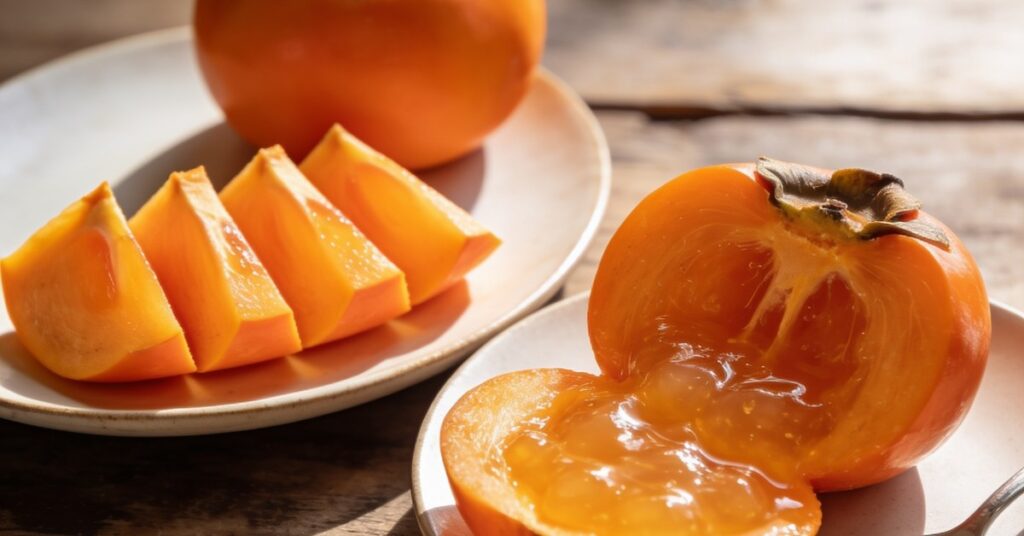
Incorporating seasonal fruits like the Kaki Persimmon into your post-transplant diet requires careful attention to texture and preparation to ensure optimal digestion and comfort. In this guide, I provide evidence-based instructions on identifying, ripening, and safely preparing both Fuyu and Hachiya varieties to help you navigate your nutritional recovery with confidence. You will learn exactly how to manage these fruits to suit your specific digestive needs, ensuring a safe and enjoyable addition to your daily meals.
To understand how to eat Kaki Persimmon correctly, you must first identify the specific variety in your hand: eat firm Fuyu persimmons like an apple or scoop out the jelly-like flesh of a fully ripened Hachiya with a spoon. Always remove the green stem leaf, rinse the fruit thoroughly, and be aware that while Fuyu skin is soft and edible, the Hachiya skin is typically too bitter to enjoy. Ever wondered if this fits into your recovery plan? Choosing the right preparation method ensures your digestive system processes the fruit efficiently without unnecessary discomfort.
How to eat kaki persimmon
Understanding Your Persimmon Variety
Determining the optimal way to consume a persimmon depends entirely on the specific variety you have purchased. There are two primary types of this fruit found in markets:
- Fuyu: Characterised by a flat bottom and a sweet flavour profile. These are best enjoyed when they are still firm, much like a crisp apple.
- Hachiya: Recognisable by its tapered, acorn-like shape. These must be allowed to reach a squishy, jelly-like consistency before consumption. Eating them while unripe results in a highly unpleasant, bitter, and tannic experience.
Preparing and Eating Firm Persimmons (Fuyu)
If you have selected a Fuyu persimmon, the preparation process is straightforward:
- Rinse the fruit thoroughly under cool, running water.
- Remove the green leafy calyx at the top.
- You may consume the fruit in its entirety, skin included, by biting into it as you would an apple, or alternatively, slice it into convenient wedges.
Preparing and Eating Soft Persimmons (Hachiya)
When dealing with the softer Hachiya variety, patience is essential to ensure the fruit is properly ripened:
- Wait until the fruit yields to gentle pressure, feeling soft like a water balloon or thick jelly.
- Use a clean knife to slice off the top portion of the fruit.
- Utilise a small spoon to scoop out the succulent, pudding-like internal pulp.
- It is advisable to discard the tougher outer skin rather than consuming it.
Quick Dehydration Method
For those interested in preserving their harvest or altering the texture, you can dehydrate the fruit at home. Place the persimmons in an oven set to the lowest possible temperature, ideally no higher than 50ºC (120ºF). Allow them to sit for 18 to 24 hours, monitoring them periodically throughout the process.
Distinguishing Between Types Of Persimmon: Fuyu And Hachiya
The primary difference between these two common varieties lies in their astringency, which dictates how they should be handled to ensure they are palatable and safe for a sensitive gut. Fuyu persimmons are non-astringent, meaning they possess a squat, round shape with a flat bottom and can be safely consumed while still firm, much like a crisp apple. Conversely, Hachiya persimmons are astringent and exhibit an acorn-like, pointed shape; they must be left to ripen until they are extremely soft, as they contain high levels of tannins that can be difficult for the digestive system if consumed prematurely.
| Feature | Fuyu Persimmon | Hachiya Persimmon |
|---|---|---|
| Shape | Squat, round | Acorn-like, pointed |
| Texture when ripe | Firm (like an apple) | Soft (like pudding) |
| Skin | Edible | Discard (bitter) |
Identifying Sweet Persimmons And Fuyu Varieties
Fuyu persimmons are considered fully ripe when they turn a rich, dark orange and yield very slightly to a gentle squeeze. These fruits require 6 to 7 days of ripening if purchased while still hard, and they generally stay fresh for approximately five days once they reach the ideal stage for consumption.
Identifying Hachiya And American Persimmon Characteristics
Hachiya persimmons must be extremely soft, feeling like a water balloon, jelly, or pudding, before they are considered safe to eat. When they reach this stage, the skin should appear a deep, translucent orange-red, and the fruit will feel as if it is about to burst, similar to a very ripe plum; if you find a fruit that has fallen off the tree, it will naturally be mushy and ready for immediate use.
Proper Preparation And Safety When You Eat Persimmons
You do not need to peel Fuyu persimmons as their skin is thin and edible, but you should always discard the skin of a Hachiya persimmon because it is bitter and contains high concentrations of tannins. Before any preparation, always use a knife to remove the green top stem, and ensure the entire fruit is rinsed thoroughly under cool water to remove any field debris, which is a crucial hygiene step for anyone managing intestinal health.
Remember: Always keep a food diary when introducing new fruits into your post-transplant diet to track how your graft function and digestion respond to different sources of fibre.
Proven Techniques For Ripening Hard Kaki Fruit
Hard persimmons can be ripened quickly by placing them in a closed paper or plastic bag alongside a ripe banana or apple, which releases ethylene gas to accelerate the process. This method typically takes 3 to 6 days at room temperature, though you must check the fruit at least once or twice per day to monitor progress. It is essential to open the bag daily to ventilate excess moisture, which prevents the formation of mould—a critical consideration for patients with immunosuppression.
- Place firm fruit in a bag with a banana or apple.
- Leave at room temperature for 3 to 6 days.
- Check daily for ripeness and ventilation.
- Wash thoroughly before consumption.
Alternative Ripening And Storage Methods
If you prefer an alternative to bag-ripening, you can place hard persimmons in the freezer until they are frozen solid, a process that can take overnight or up to 24 hours. Once frozen, allow the fruit to thaw completely at room temperature before eating, or you can place Hachiya persimmons in a pot or deep sauté pan with the leaf side down alongside an apple to encourage a uniform ripening environment.
Creative Persimmon Recipes For Digestive Health
The best way to prepare and serve Kaki persimmon depends entirely on the variety, with Fuyu offering versatility in crunch and Hachiya providing a soft, pulp-based texture. Post-transplant recovery is a journey, and managing your nutrition is a huge step toward getting back to normal life, so don’t be afraid to experiment with these flavours as you learn how to eat Kaki Persimmon safely.
- Slice Fuyu into salads with protein-rich nuts or goat’s cheese.
- Add fresh chunks to yoghurt or granola for an easy morning meal.
- Wrap Fuyu in prosciutto for a savoury, nutrient-dense snack.
Processing Hachiya Pulp
Hachiya persimmons should only be sliced when they are jelly-soft to avoid the bitterness associated with the tannins found in under-ripe flesh. The most effective way to serve them is to slice off the top and scoop out the flesh with a spoon, or you can puree the pulp for use in muffins, quick breads, tarts, and cakes. For a unique, sorbet-like experience, freeze a whole, ripe Hachiya, let it thaw for 15 to 20 minutes, and then consume the pulp directly from the skin.
Frequently Asked Questions
Is it safe for transplant patients to eat the skin of a Fuyu persimmon?
Yes, the skin of a Fuyu persimmon is edible and generally safe, provided it is washed thoroughly, but always consult your clinical team if you are currently following a low-residue or specific post-transplant fibre protocol.
What is the best way to determine if a Hachiya is ready to eat?
A Hachiya is ready when it feels like a water balloon or pudding; if it still feels firm or has any resistance, it is not ready and will be unpleasantly astringent.
Can I use a microwave to ripen my persimmons faster?
No, using an oven-drying method at low heat or natural ripening with ethylene-producing fruits like bananas is the only recommended way to alter the texture of the fruit without compromising its nutritional integrity.
Do I need to worry about the sugar content in fresh persimmons?
Persimmons are naturally sweet, but they are generally well-tolerated in moderate portions as part of a balanced diet. If you are monitoring your blood glucose levels or managing diabetic concerns post-transplant, track your intake as you would with any other fruit.
Mastering how to eat Kaki Persimmon effectively allows you to diversify your nutrient intake while maintaining strict control over your digestive comfort. Always prioritise the ripeness of your fruit to ensure every bite supports your ongoing recovery and long-term intestinal health.